PASSES AND LAKES IN MERCANTAUR NATIONAL PARK
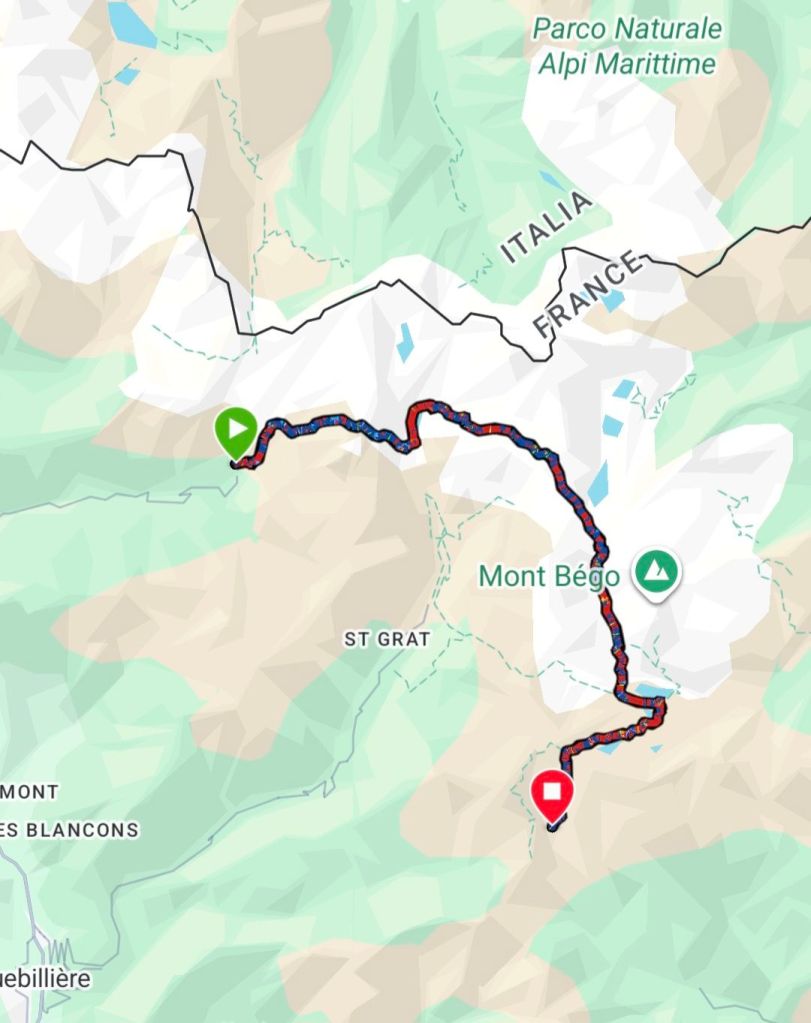
REFUGE DE LA MADONE DE FENESTRE – NEAR BAISSE CAVALINE PASS
VIA ALPINA DAY 71 – MONDAY 31 AUGUST 2026
DISTANCE HIKED: 20.0 km
ELEVATION GAIN: 1,795 m
TOTAL DISTANCE HIKED: 1,874.43 km
TOTAL ELEVATION GAIN: 96, 963m
Hammer fell asleep as soon as he was horizontal last night, and I soon followed. We were both woken around 10pm by four guys coming into the dorm that we thought we might have to ourselves. They made a lot of noise as they settled in, and soon one of them started snoring like a freight train. It sounded like he was choking for air. I put in my earbuds and turned on a podcast to block out the noise, and soon fell asleep again.
When I saw them this morning as we were leaving, I realised they weren’t hikers—or at least not hikers in the way they dressed or with the bags they carried.
Anyhow, we had a great breakfast, picked up our lunch boxes, said goodbyes to our dinner companions from last night and were on our way by 7.30.
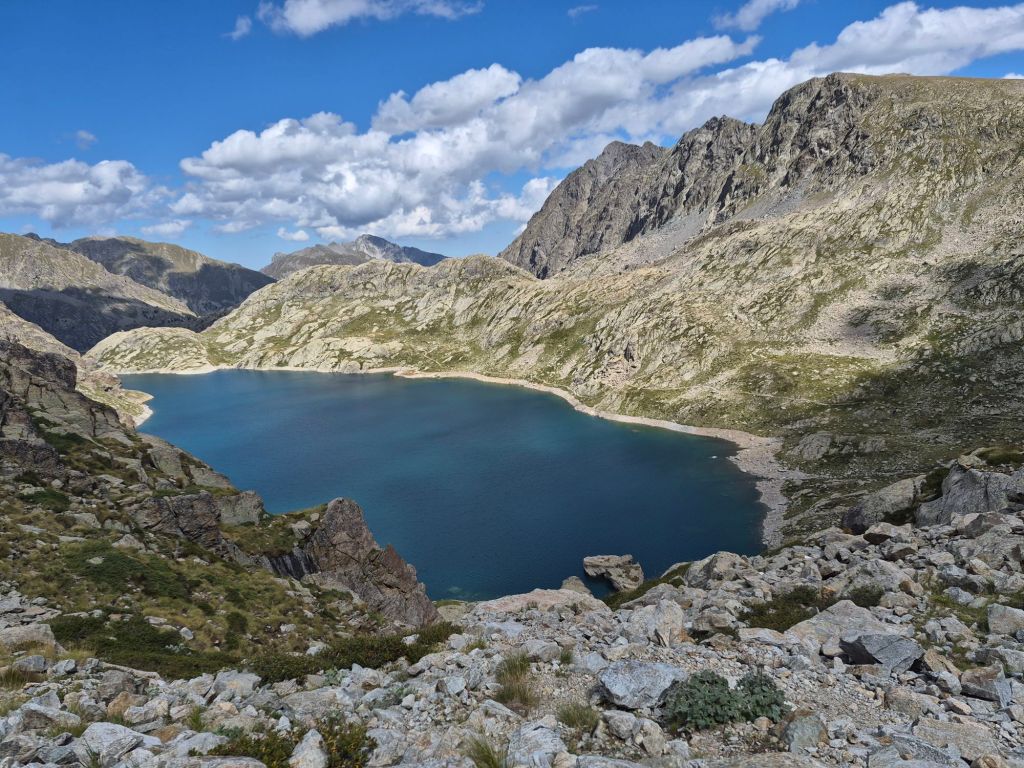
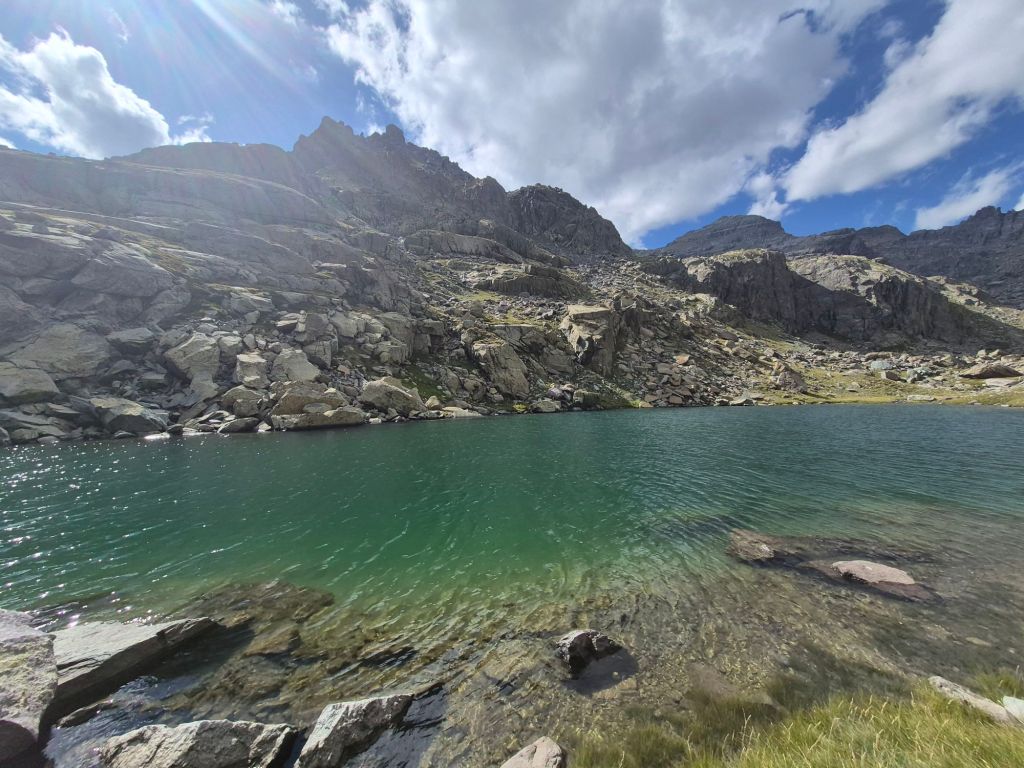
It was a day of ascending and descending multiple passes, with superb crystal-clear emerald lakes along the way.
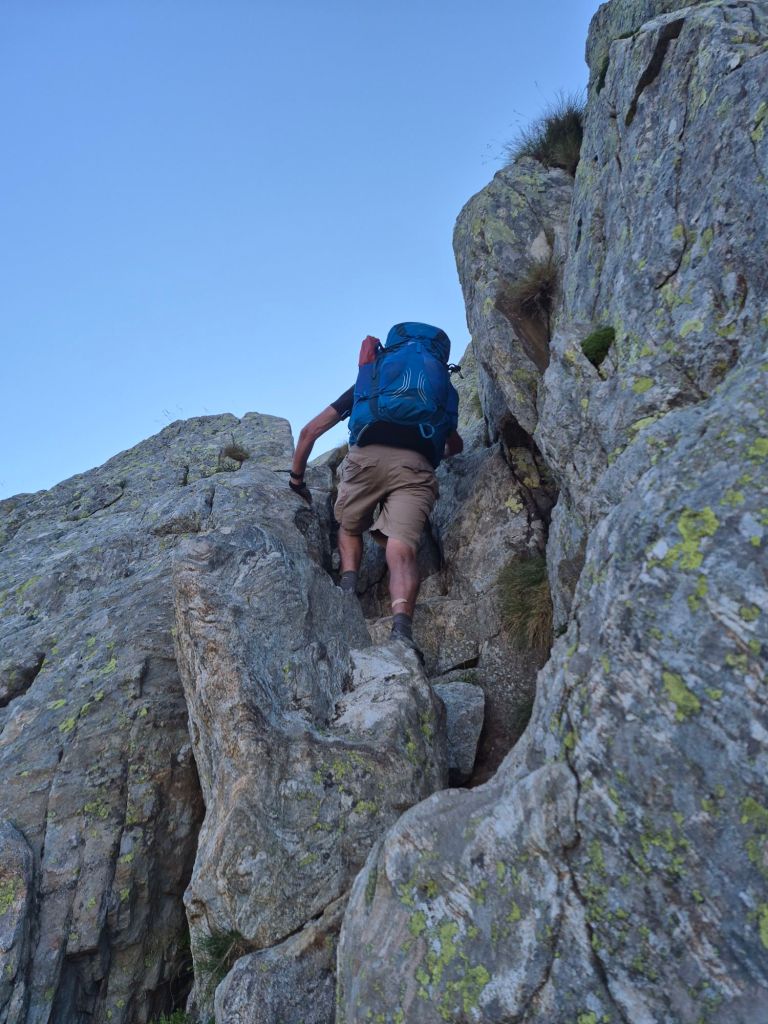
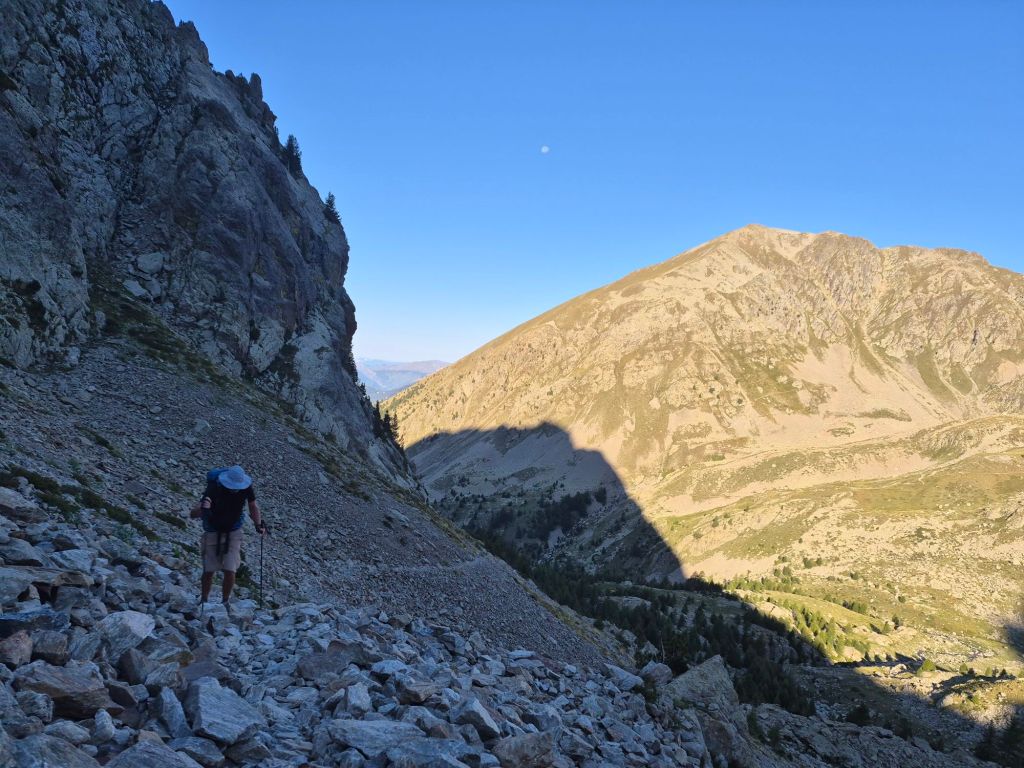
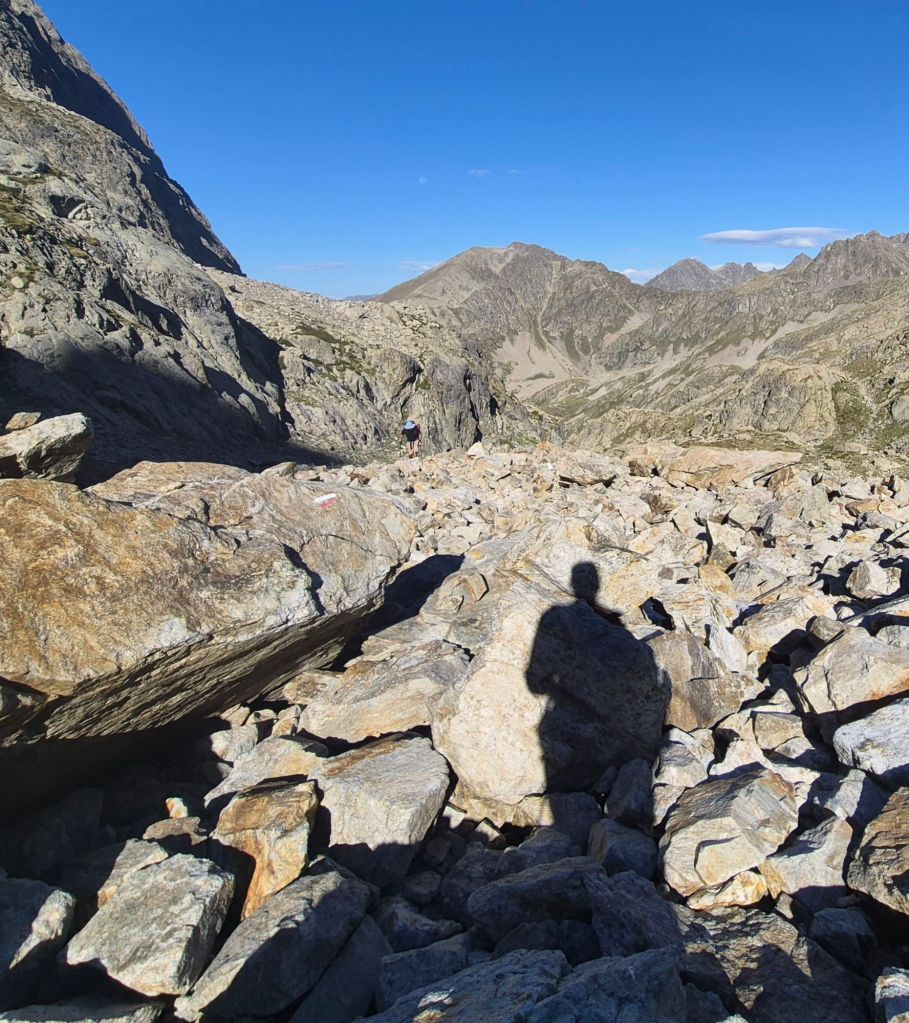
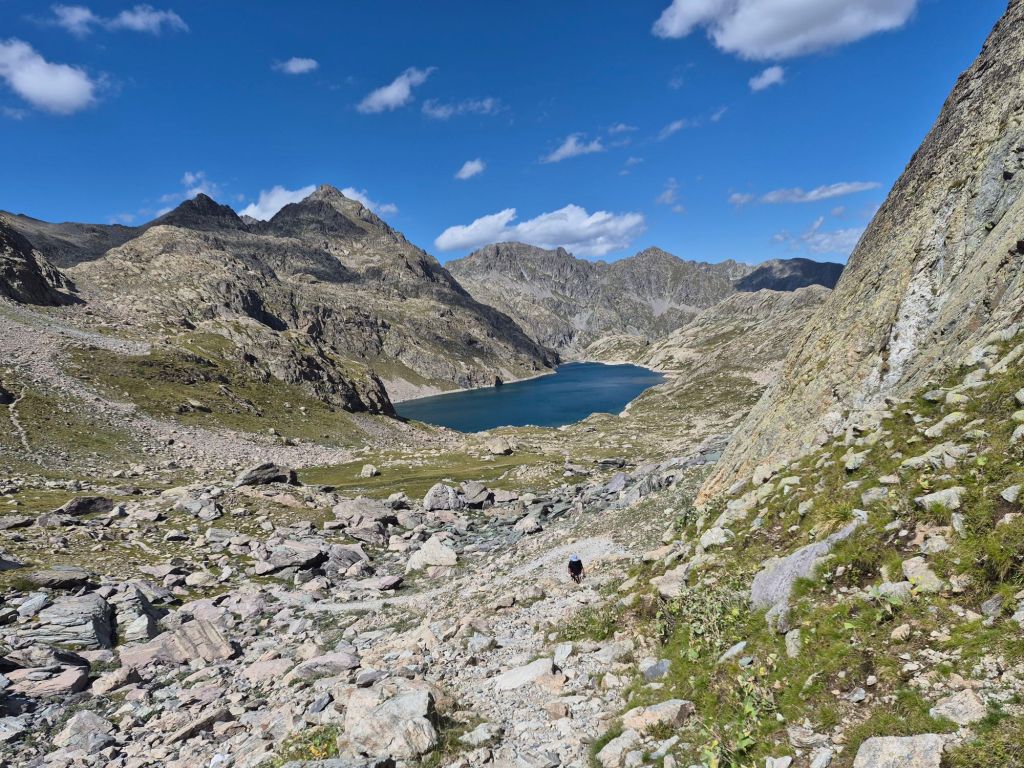
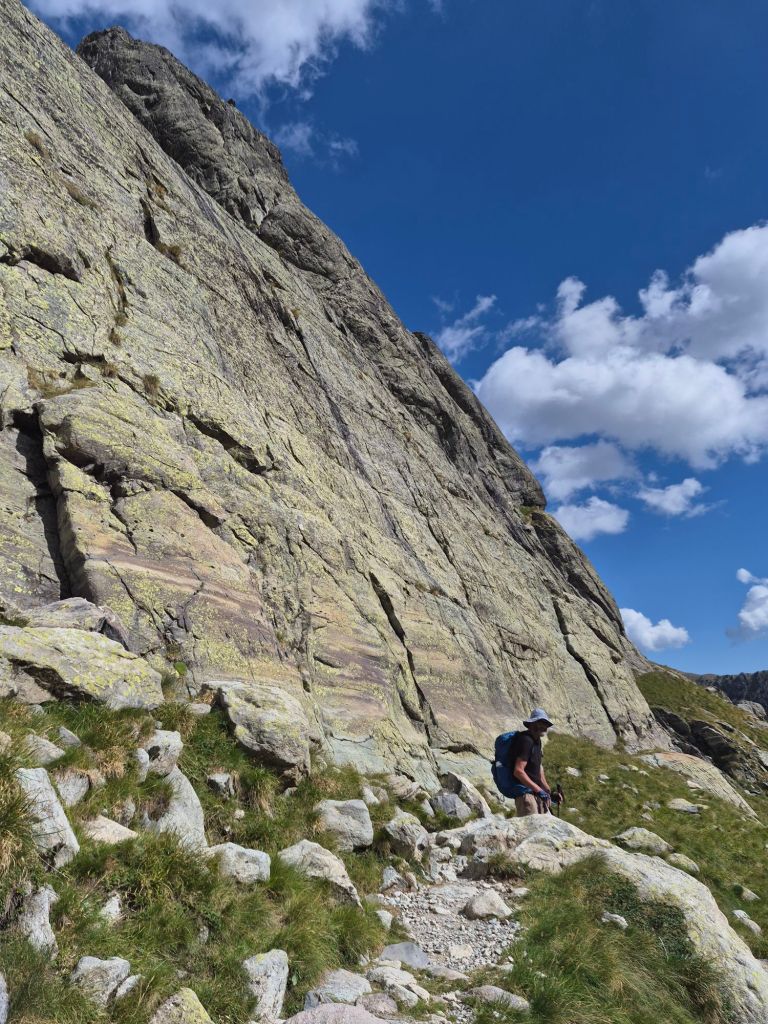
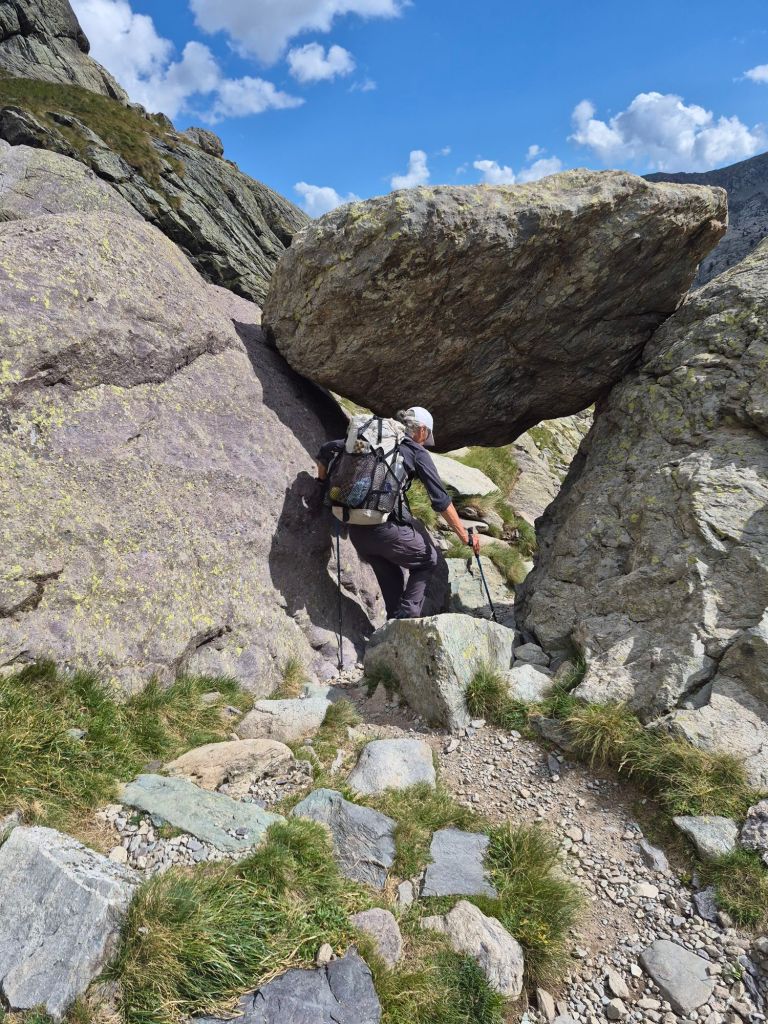
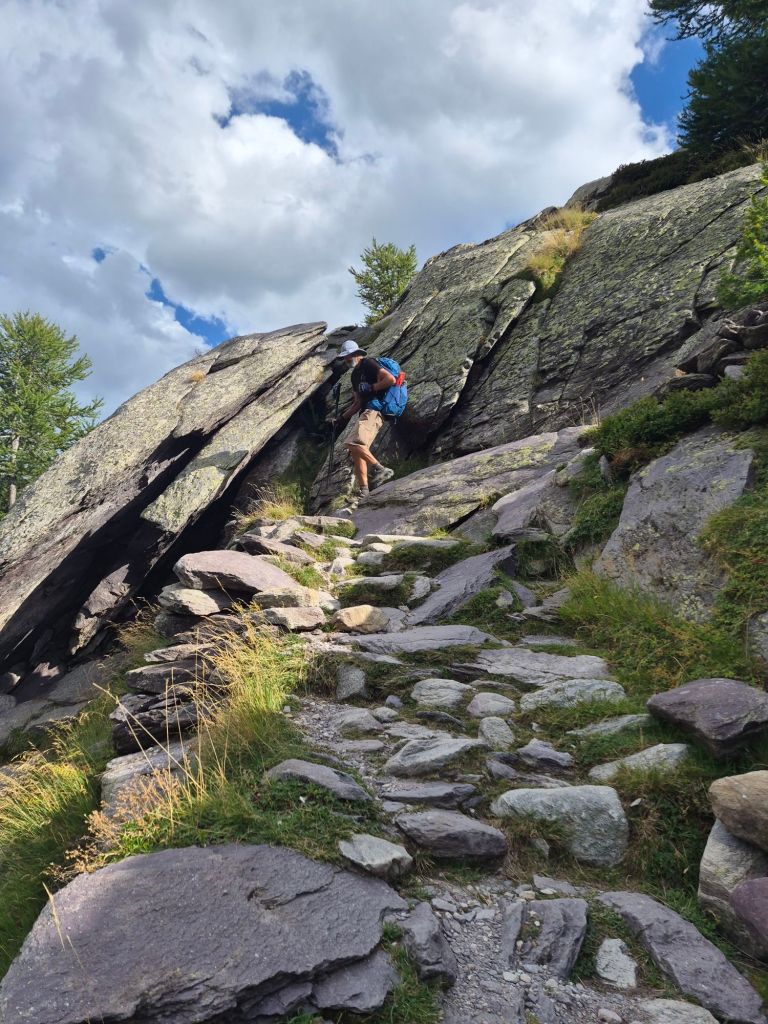
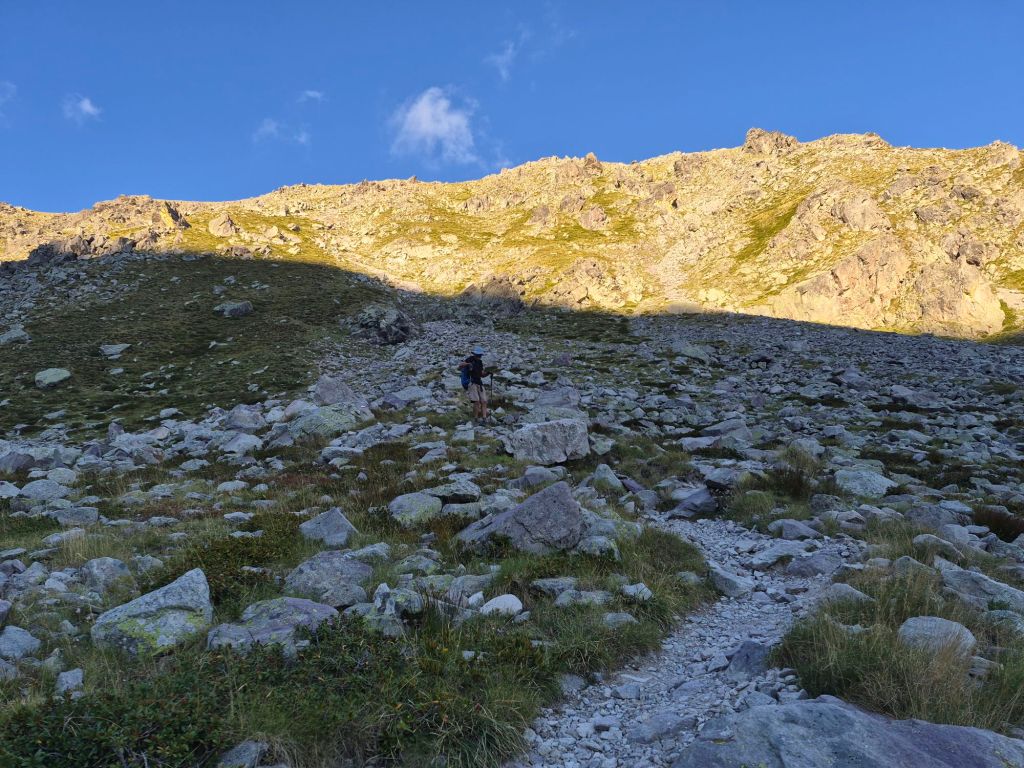
From the refuge, we had a 6 km climb through a landscape of huge boulders to Pas du Mont Colomb at 2,548 m. Progress was slow as we navigated our way through the sharp granite boulders. At times, we were on all fours, scrambling for traction to get up. The descent was just as tricky, with a narrow passage at the summit followed by steep rock stairs to start the descent.
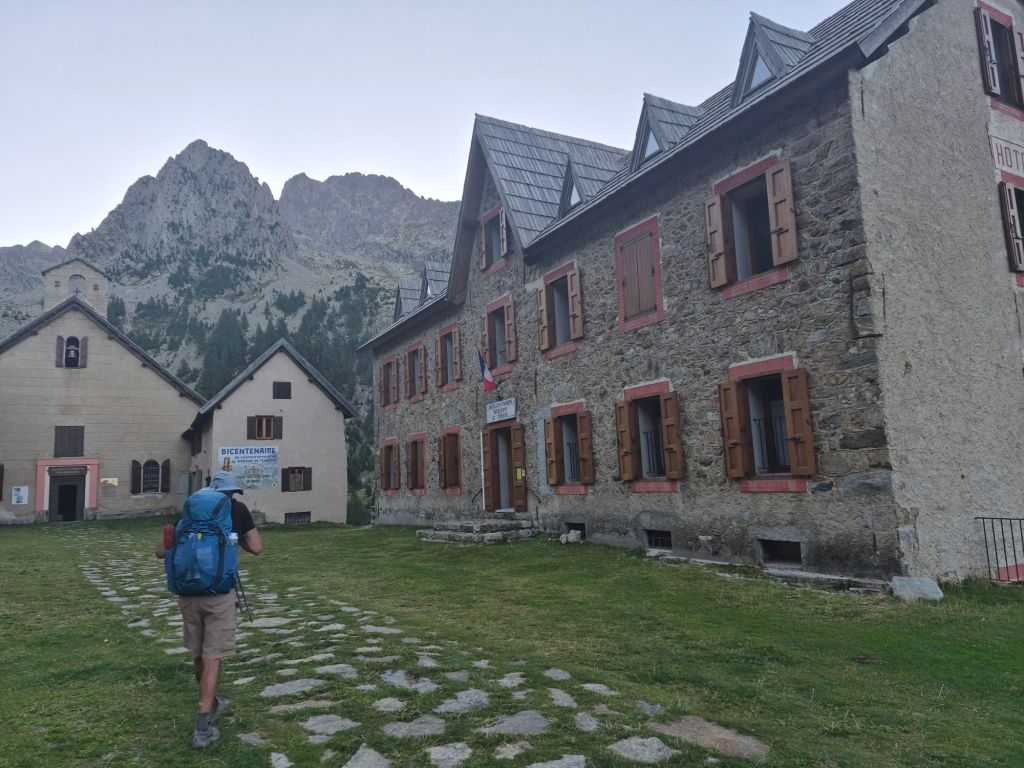
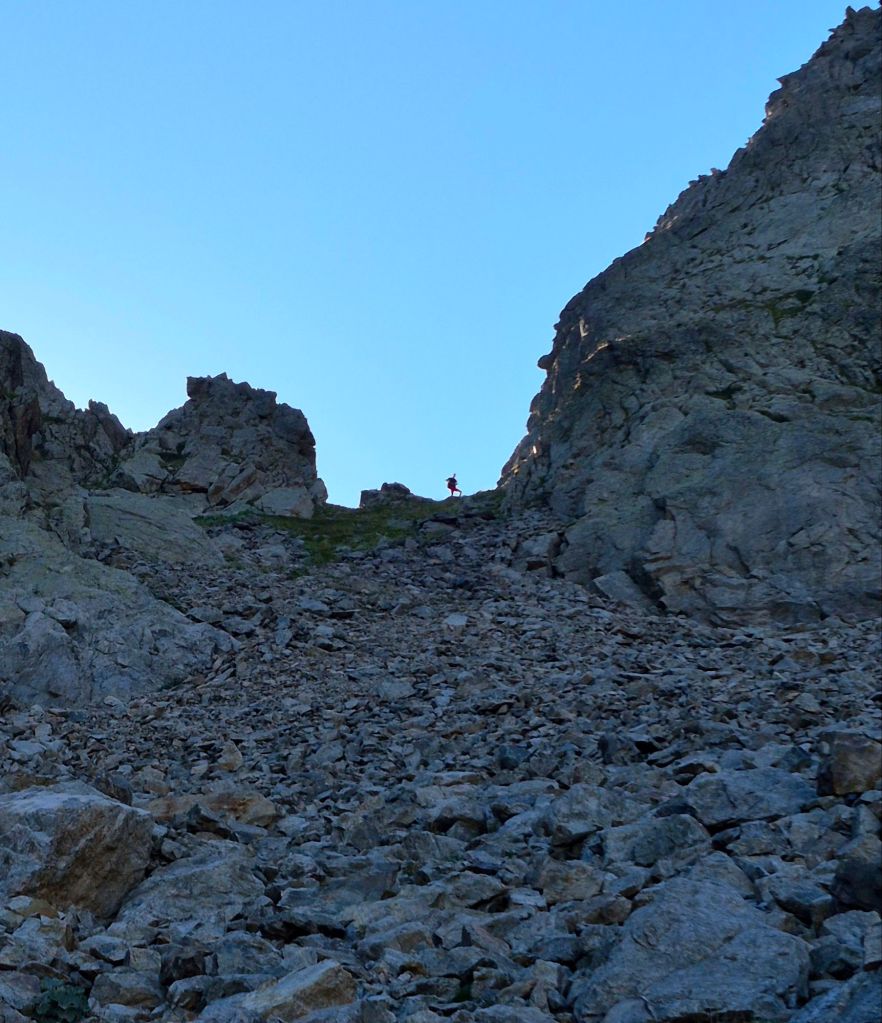
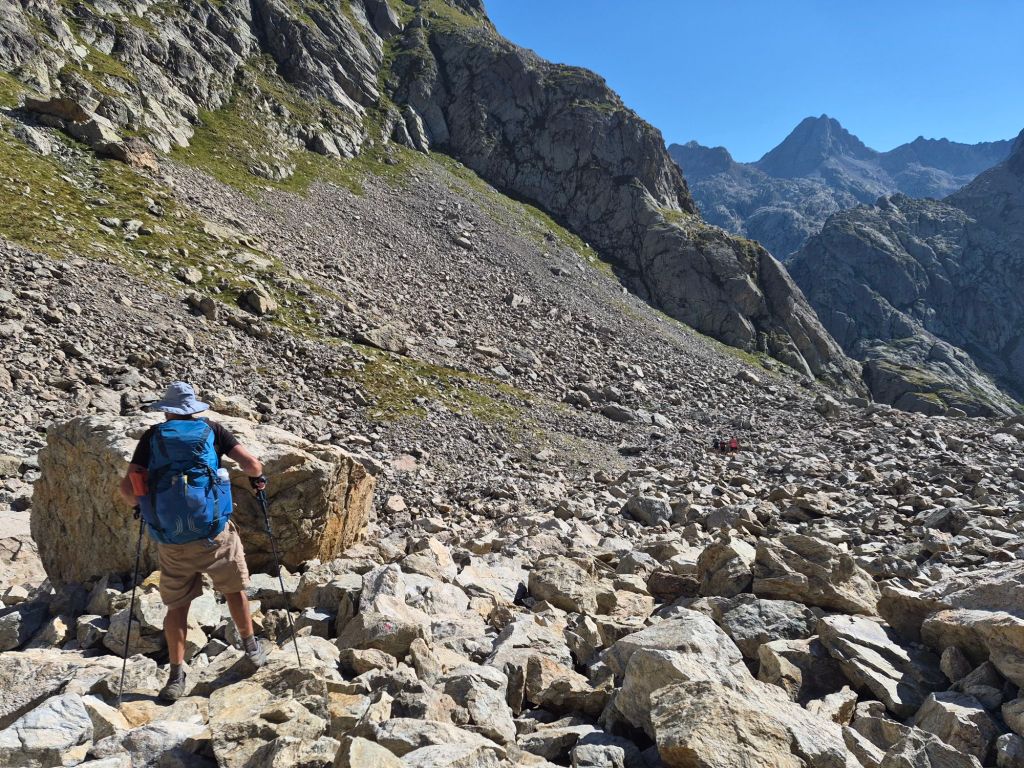
We passed the beautifully located Refuge de Nice but didn’t need to stop.
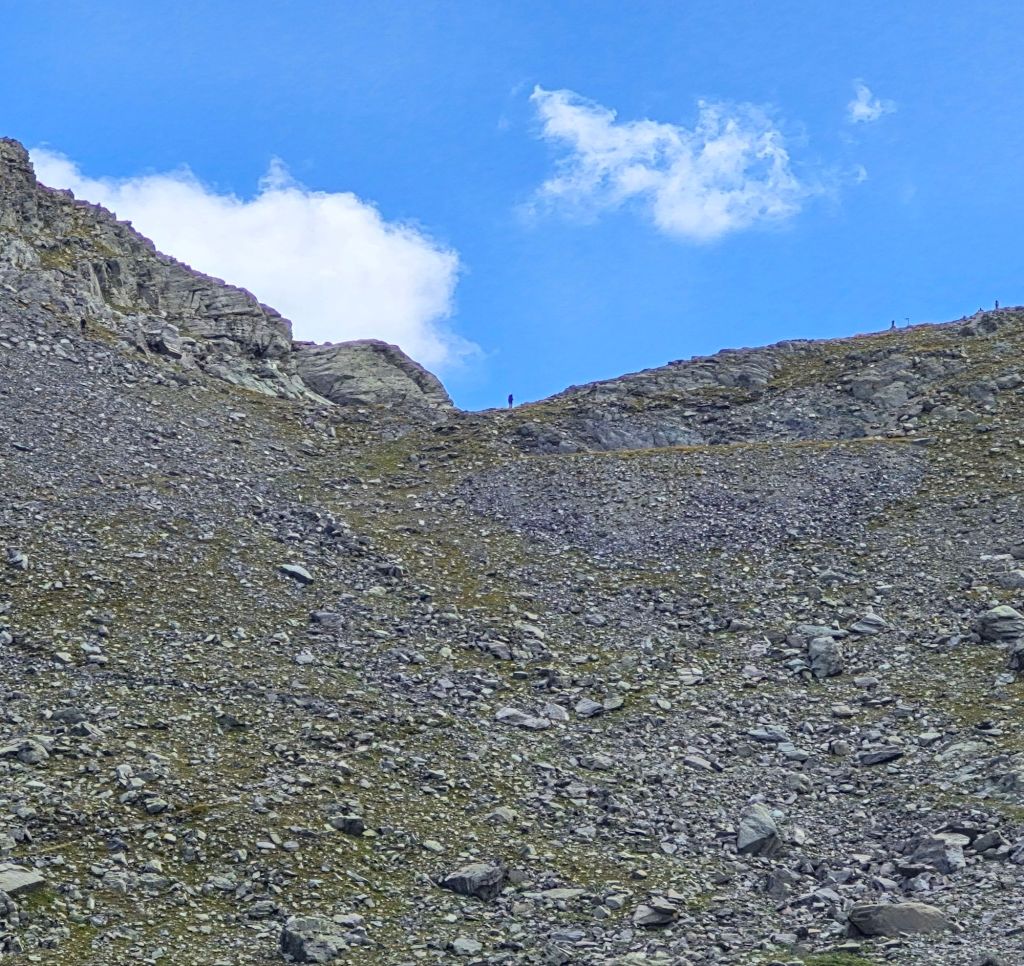
From there, we had a daunting ascent to Baisse du Basto at 2,693 m. The sharp granite boulders made the traverse difficult. Although the trail was reasonably well marked, it was still easy to lose it. At times, we felt like we were going around in circles and might never reach the pass.
We finally made it to the top around 1.30pm and stopped for lunch. I was disappointed by how little distance we had covered despite working so hard all morning.
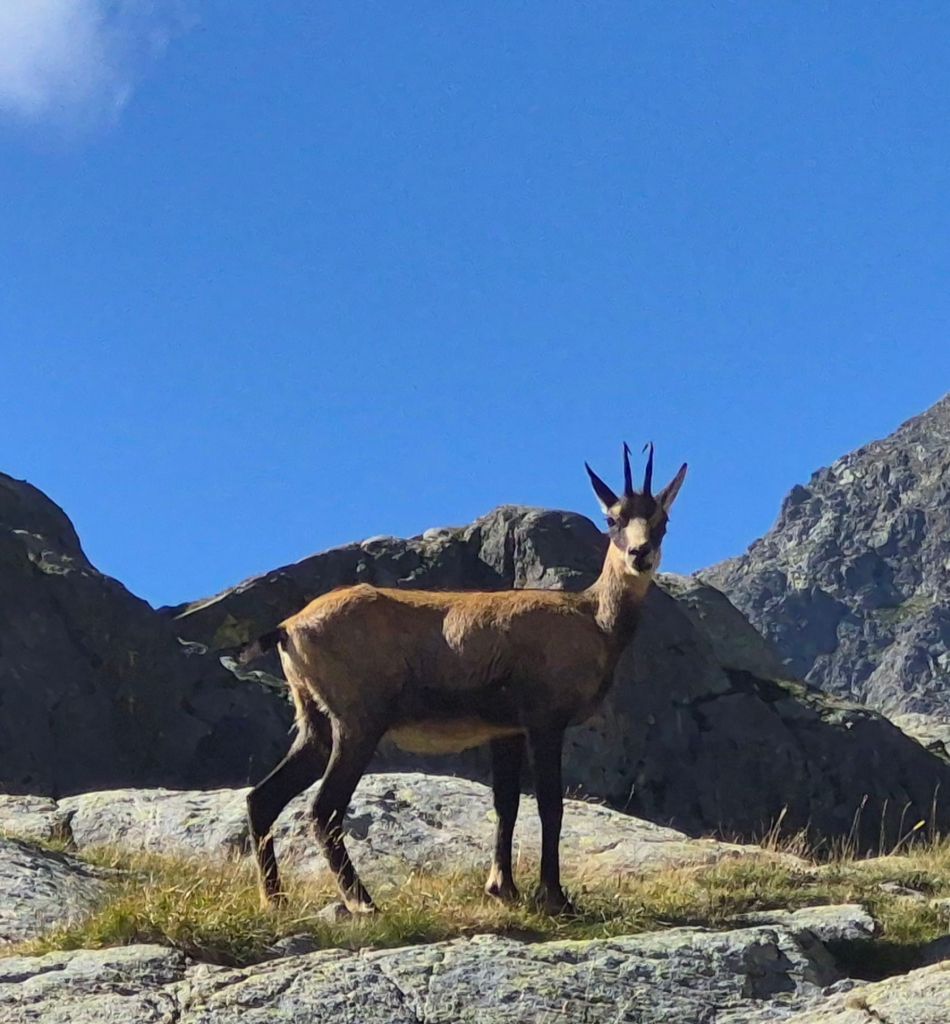
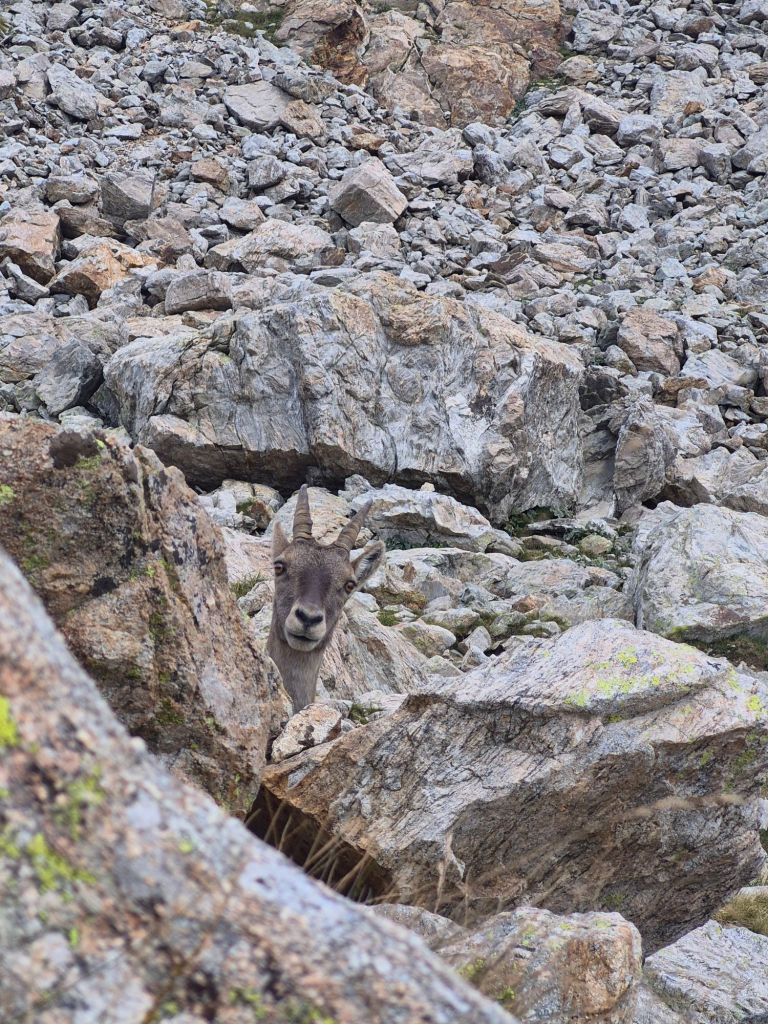
There were quite a few people making their way up to the pass, and we all enjoyed close-up views of numerous alpine chamois. They didn’t seem at all disturbed by our presence. In fact, at times they appeared quite curious, approaching us rather than being spooked by us.
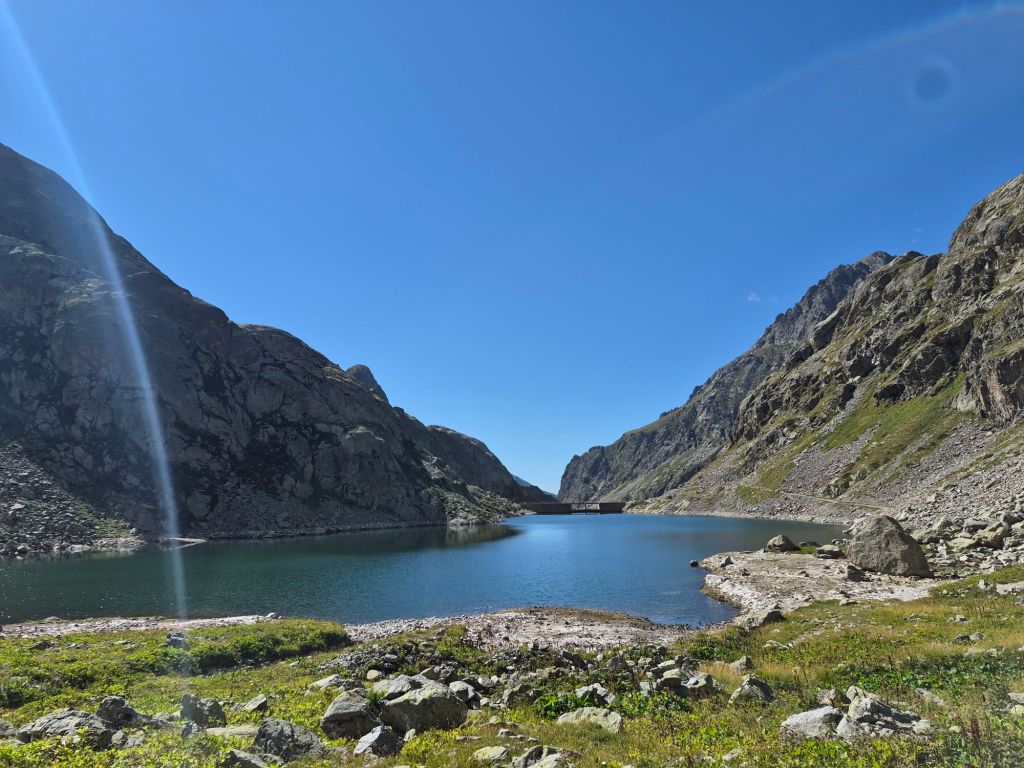
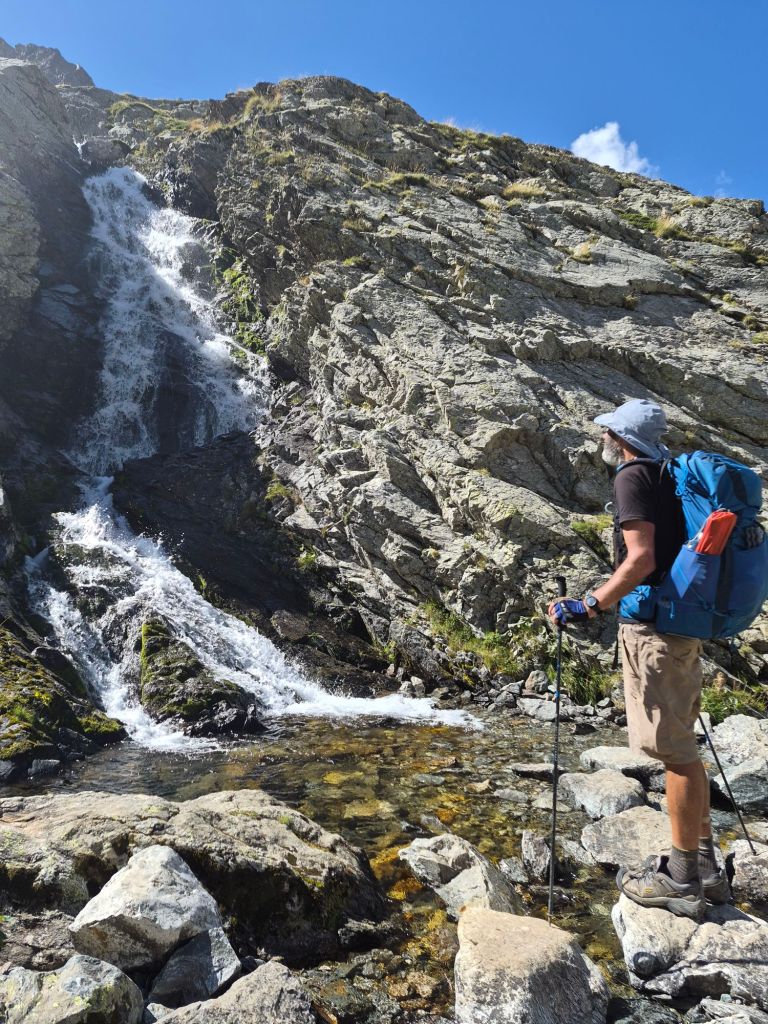
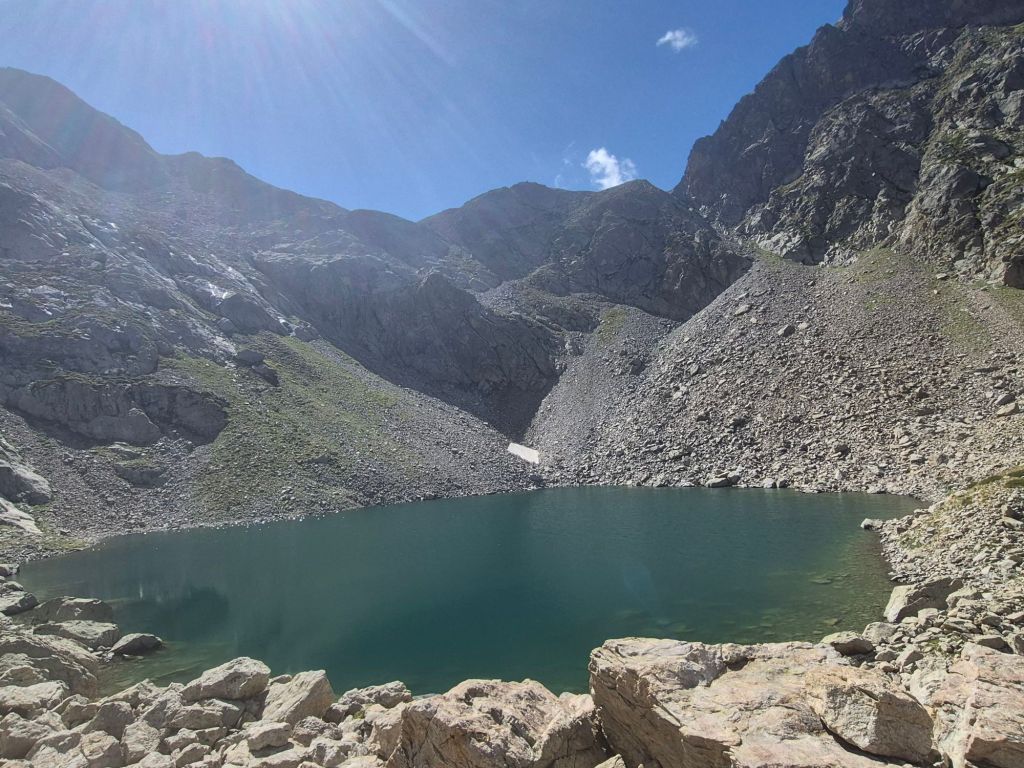
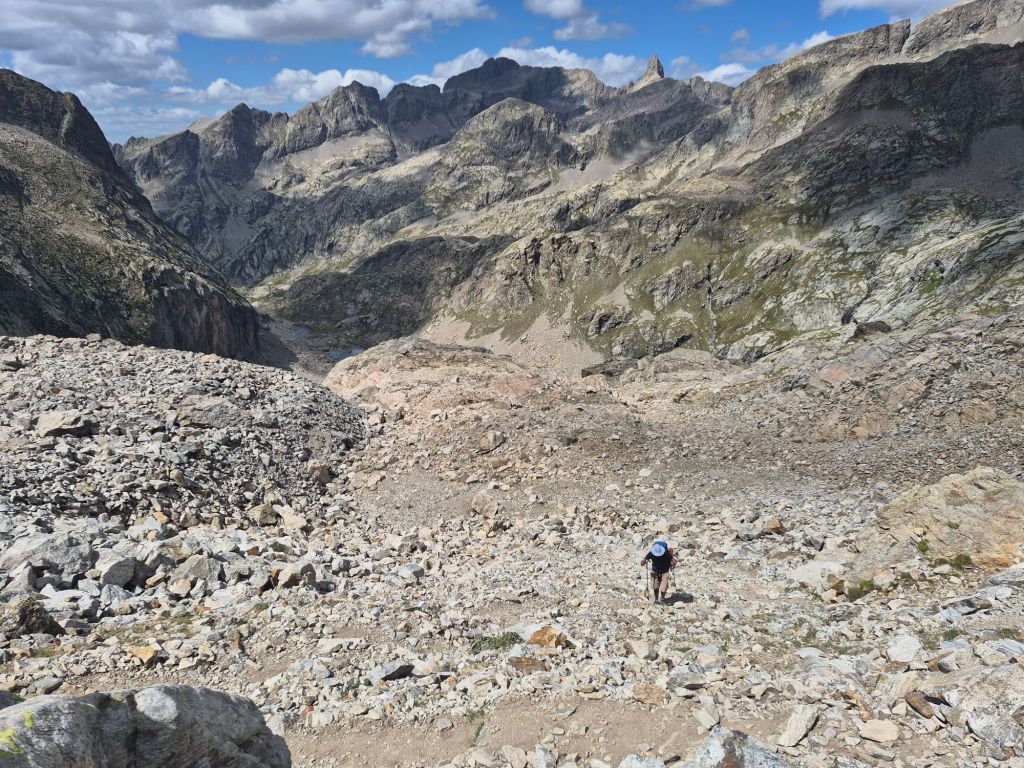
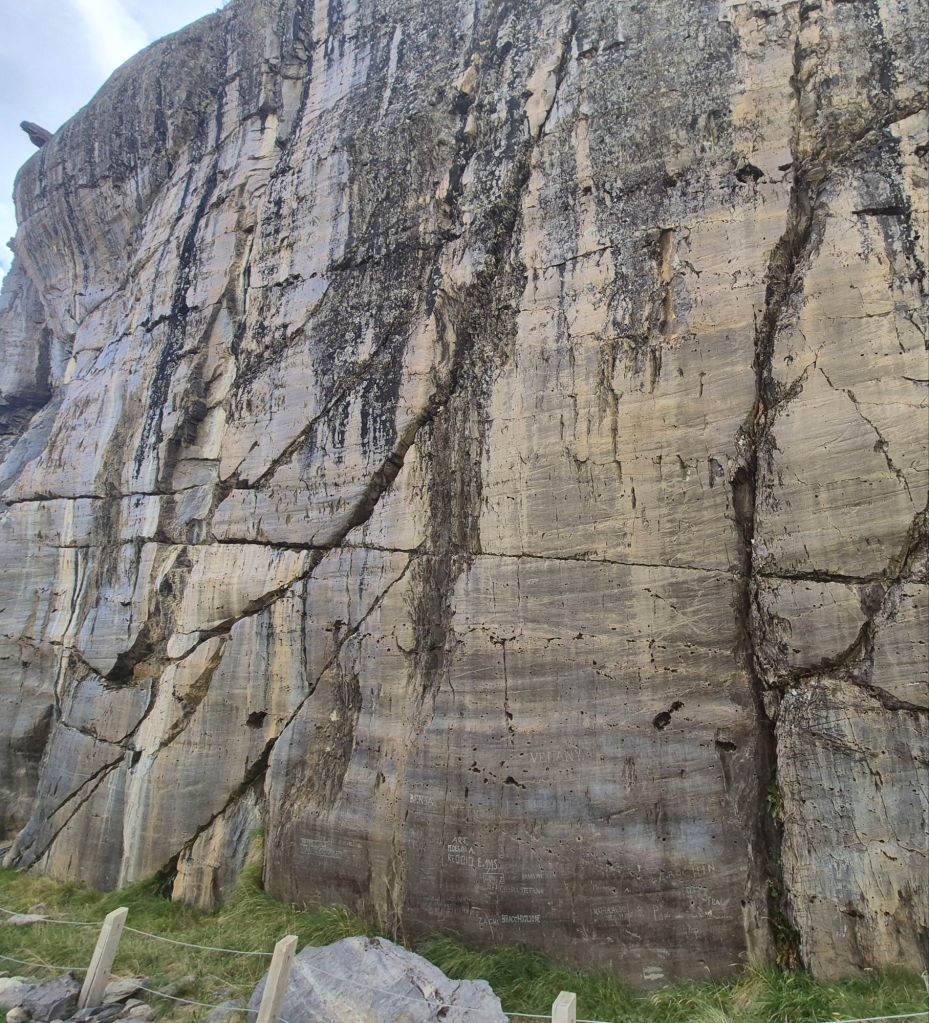
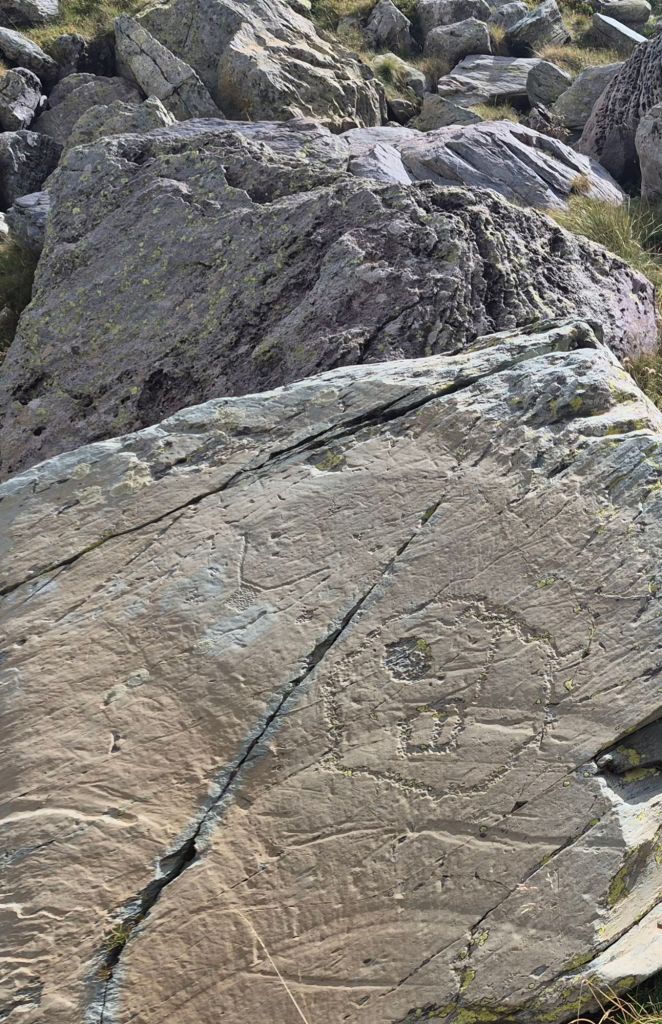
The third pass of the day, Baisse de Valmasque at 2,549 m, was relatively easy, and we made good time to the top. On the descent, we entered a zone of archaeological significance—one of the most important rock engraving sites in Europe. I couldn’t actually see any of the engravings, although the glacial scraping on the rocks was quite prominent.
It was around here, before reaching Refuge des Merveilles, that we noticed a very distinct change in the geology. The sharp granite gave way to a new purple rock strata that was much more rounded and, consequently, so much easier to hike across.
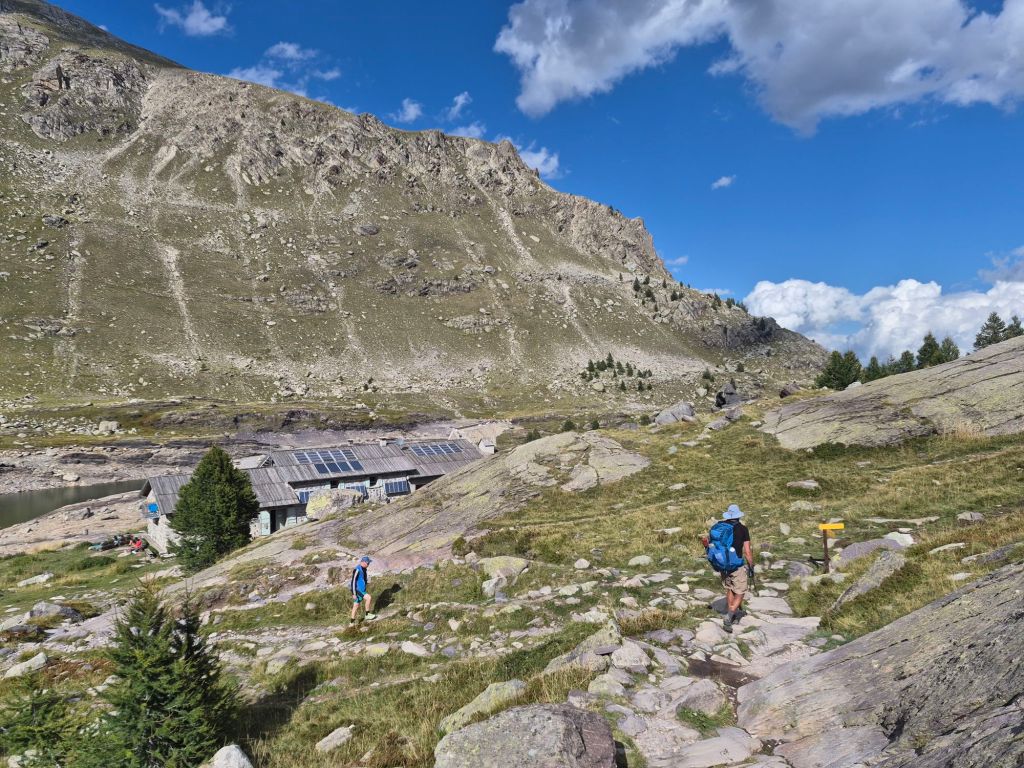
It was after 5pm when we stopped at Refuge des Merveilles for a cold drink. The hut was tempting us to stay, although it seemed very busy. It appears they run guided tours of the archaeological sites, which may explain why it was so busy.
We are still in Mercantour National Park and will be for some time tomorrow.
As we were leaving the hut, we were approached by a park police officer who informed us about the camping restrictions in the area. She was happy with where we had planned to camp, so we continued on to the next pass, Pas du Diable at 2,430 m.
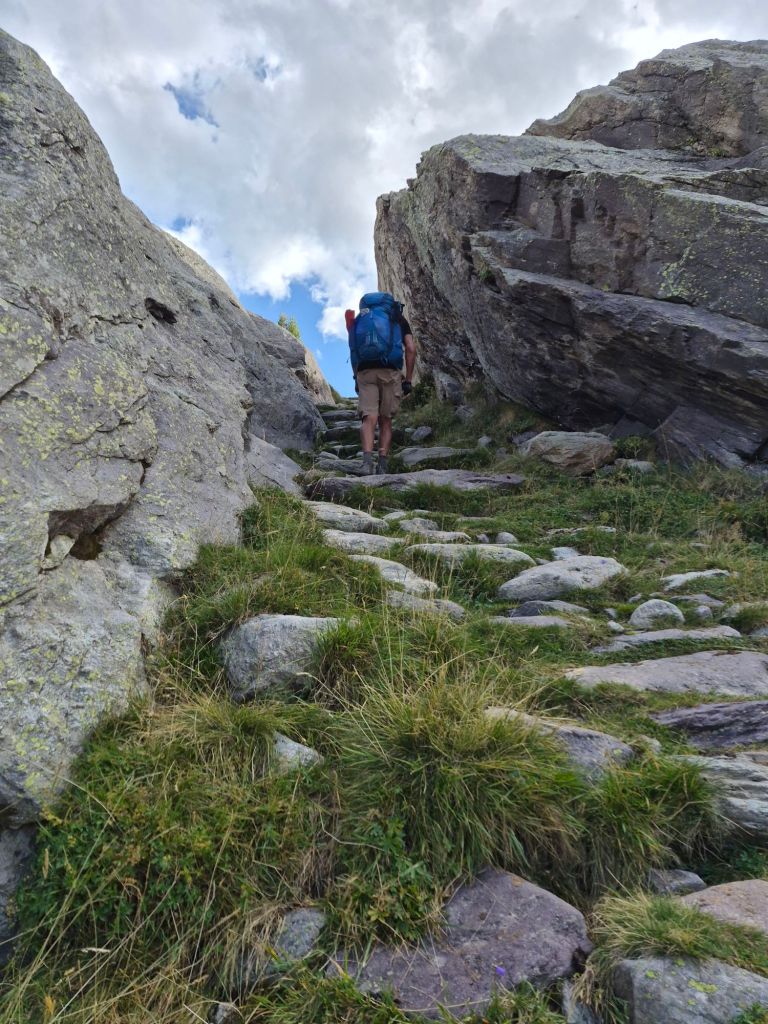
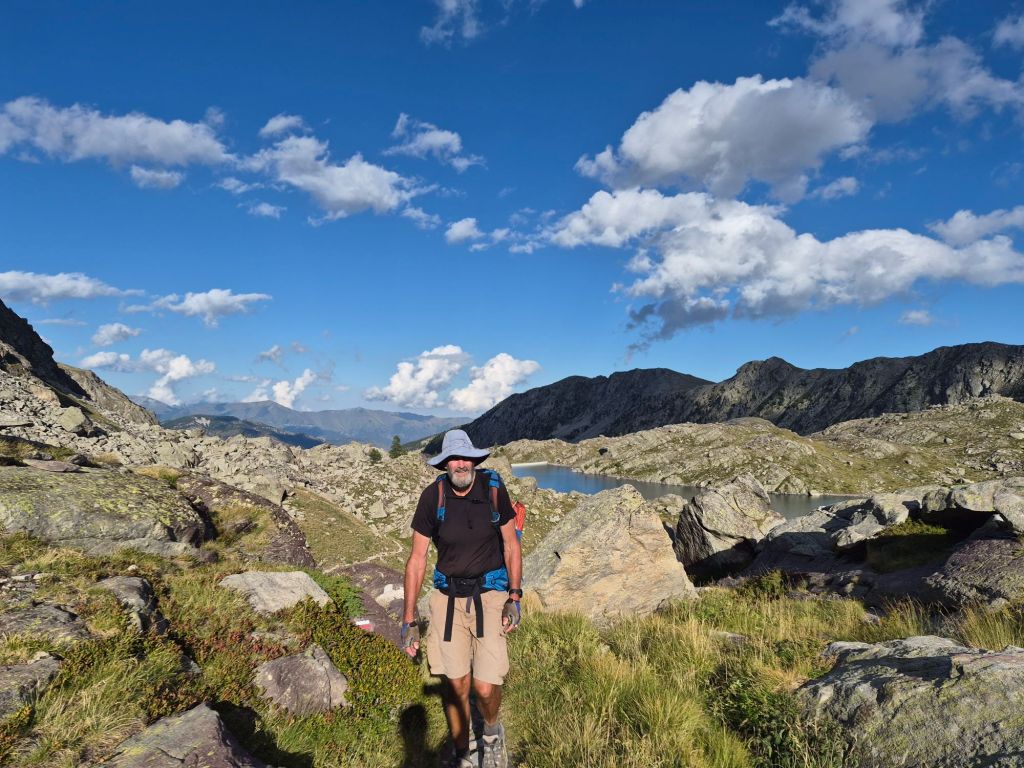
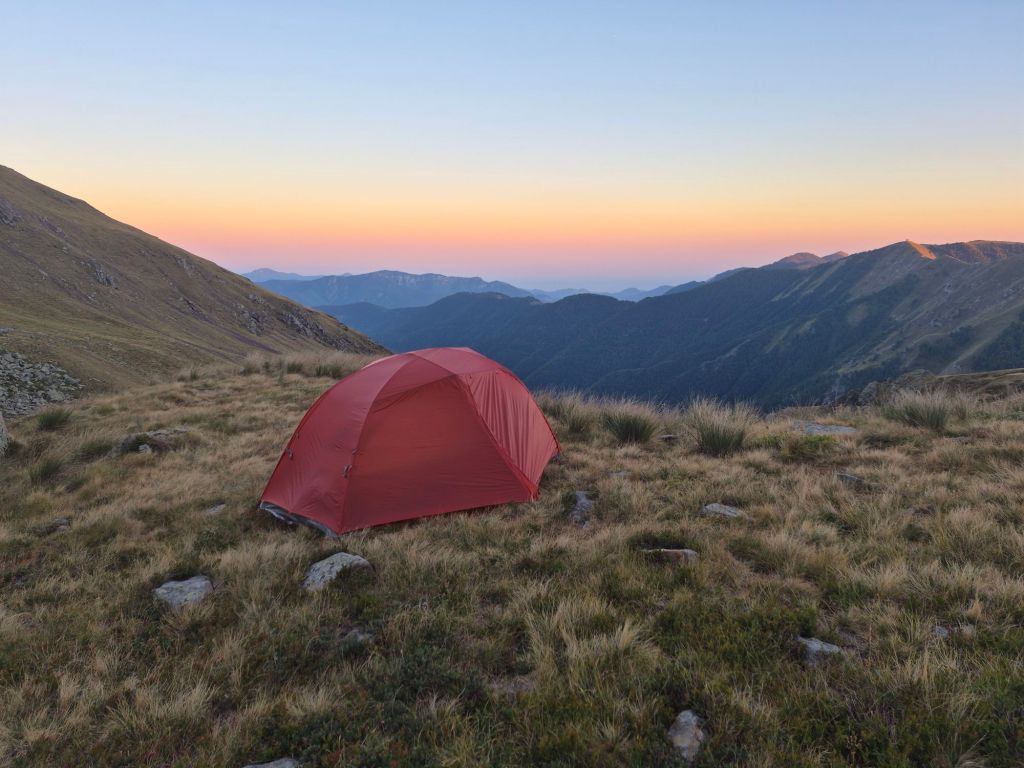
With the change in geology, hiking had become so much easier. We reached the top of the pass around 6.30pm and were thrilled to see what looked like the sea in the distance. Or at least we thought it was the sea. It was late in the day and the horizon was quite hazy, but it was pretty exciting all the same.
The end is definitely in sight.
We descended from the pass and found a flat-ish spot to camp, then called it a day.
Hammer is keen to catch up on some lost sleep.
You are so close now!!!
LikeLike
Yes Anna. And, as always, there are mixed feelings. Part of me desperately wants ir to end so I can rest… while another part wants the discovery, the unexpected encounters and the excitement of seeing what’s around the next corner to keep going.
LikeLiked by 1 person
the first section of this climb looked very challenging. Love the photo of the animal with its head popping up over the rocks. Is that a deer?
LikeLike
Its an alpine chamois Sue.
LikeLike