LEMON SQUEEZER
AT Day 082: Wednesday June 28, 2023
Mile 1375 + 17 miles/27.4 km
Total Distance Hiked: 1392 miles/2240 km
Greenwood Lake – Fingerboard Shelter
A: 3940 ft /1200 m D: 3727 ft /1137 m
I was startled awake by bad dream. So relieved that I woke up still in the comforts of a room. Hammer had not stirred. I could hear the birds outside chirping so I knew it was almost 5am. It was time to get going and get back on trail.
Jim was giving us a ride back to the trail. We didn’t want to disturb Jim too early with our usual time of departure so 8:00 a.m. was a good compromise.
We had a couple of hours to get all our stuff together and get ready for the day ahead. We were re-energized and ready to go. On the drive to the trailhead Jim was telling us about the time he almost visited Sydney in the 1960s as a young GI stationed in Vietnam. At the last minute his leave was revoked and he never got to see Sydney.It was a real shame because it was quite a party town in the 1960s with the visiting GIs from what we’ve read.
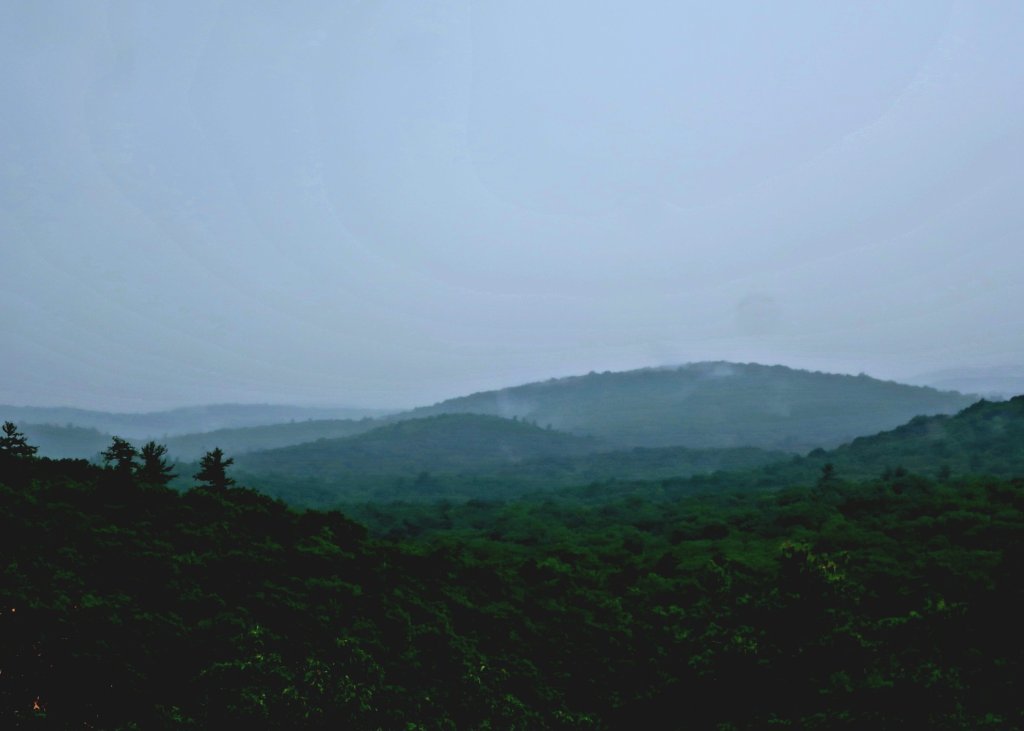
It was overcast but not raining. The ground was saturated from the last two days of rain. The trail was flat for the first half hour and it was so nice to be back. And then the ridgeline trail returned. We soon hit The Pinnacles which was another rocky traverse, not very long but long enough to bring back the not too distant memories of the wet reverse on Monday.
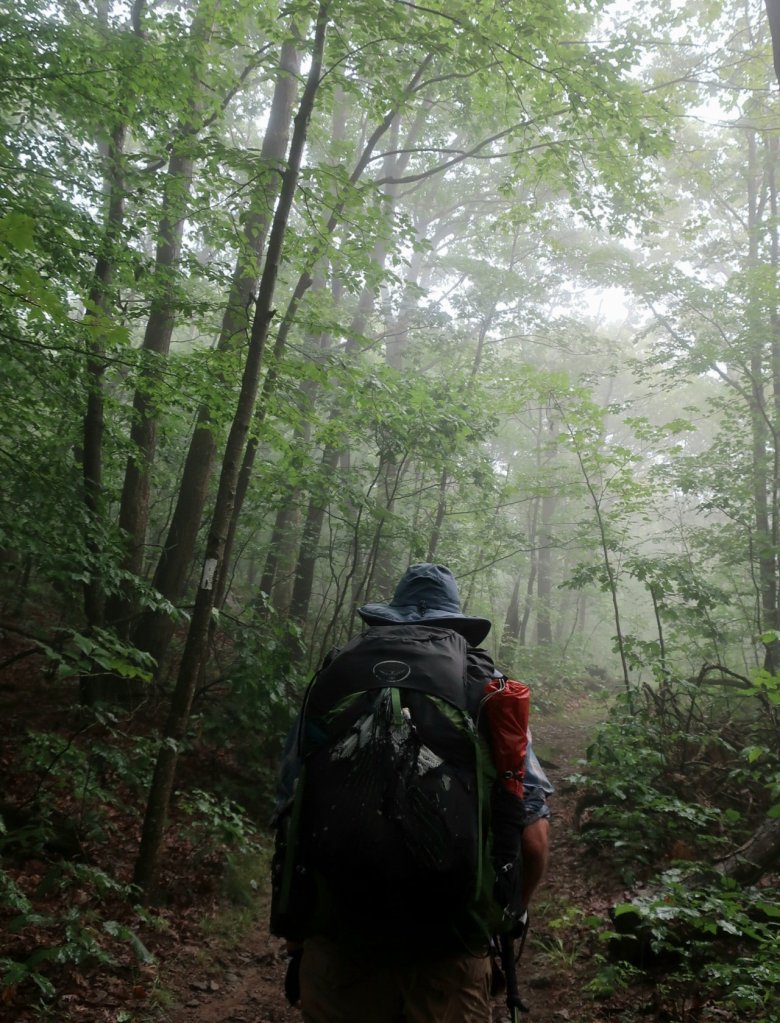


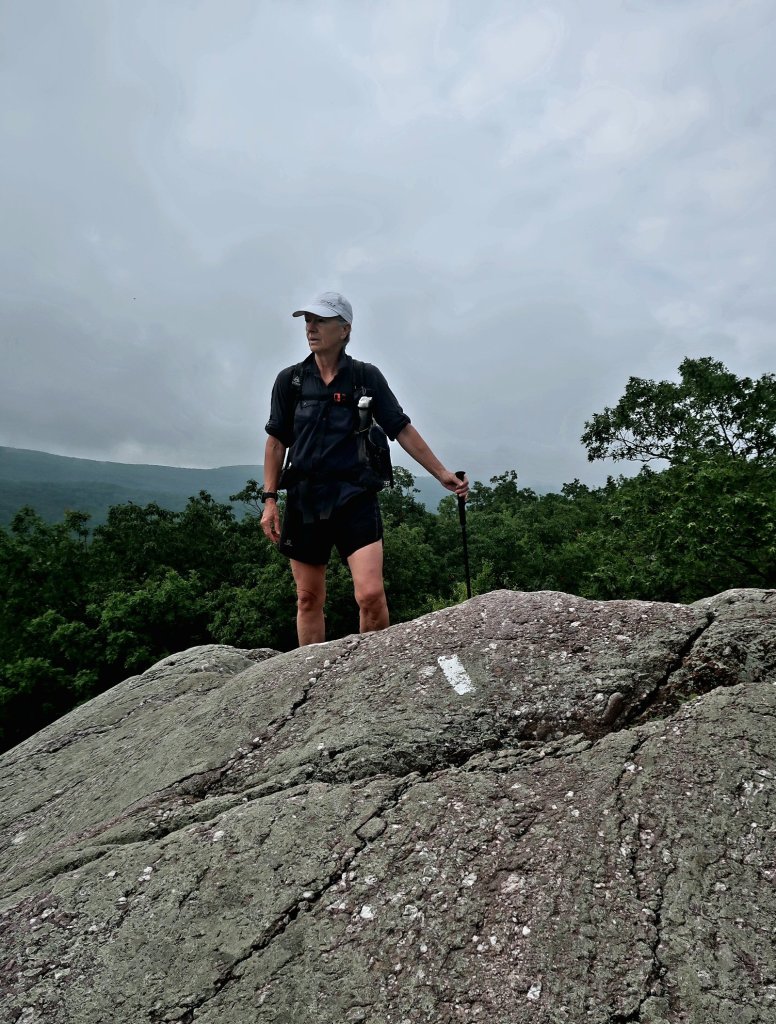
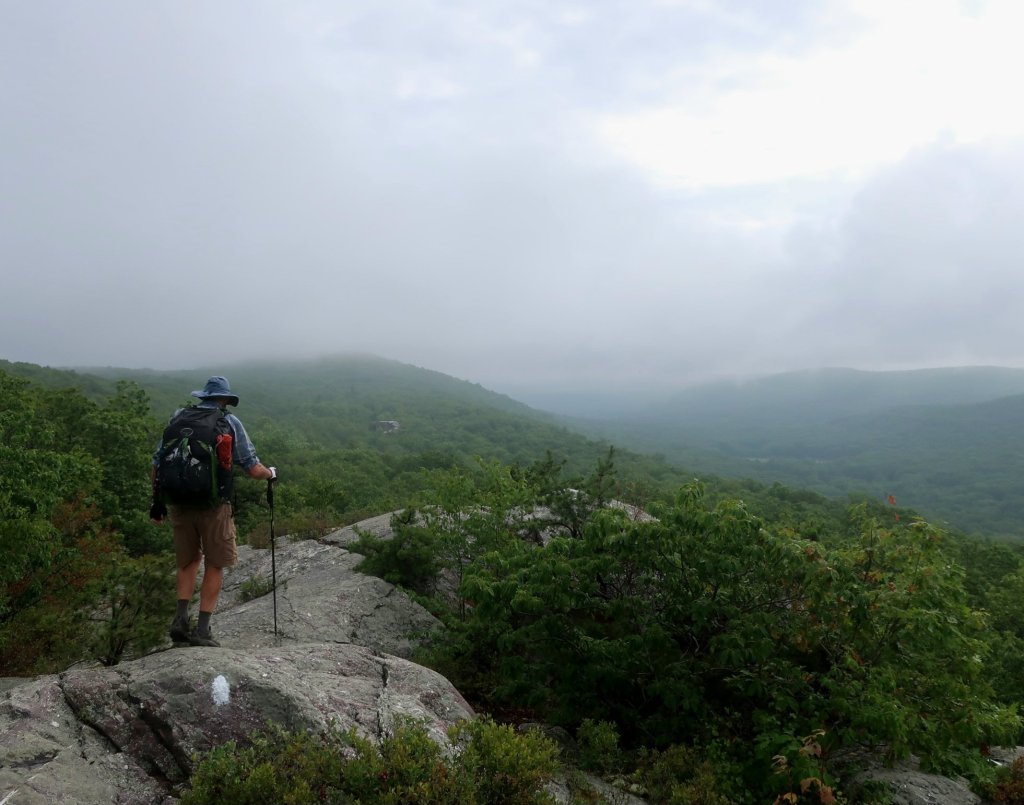
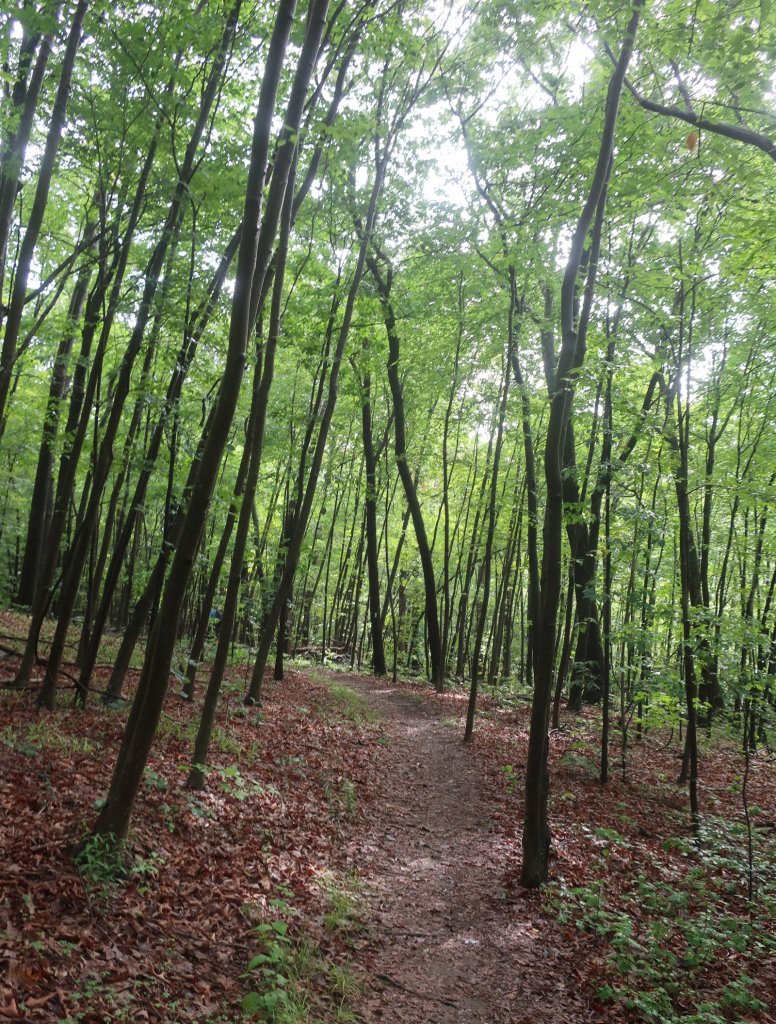
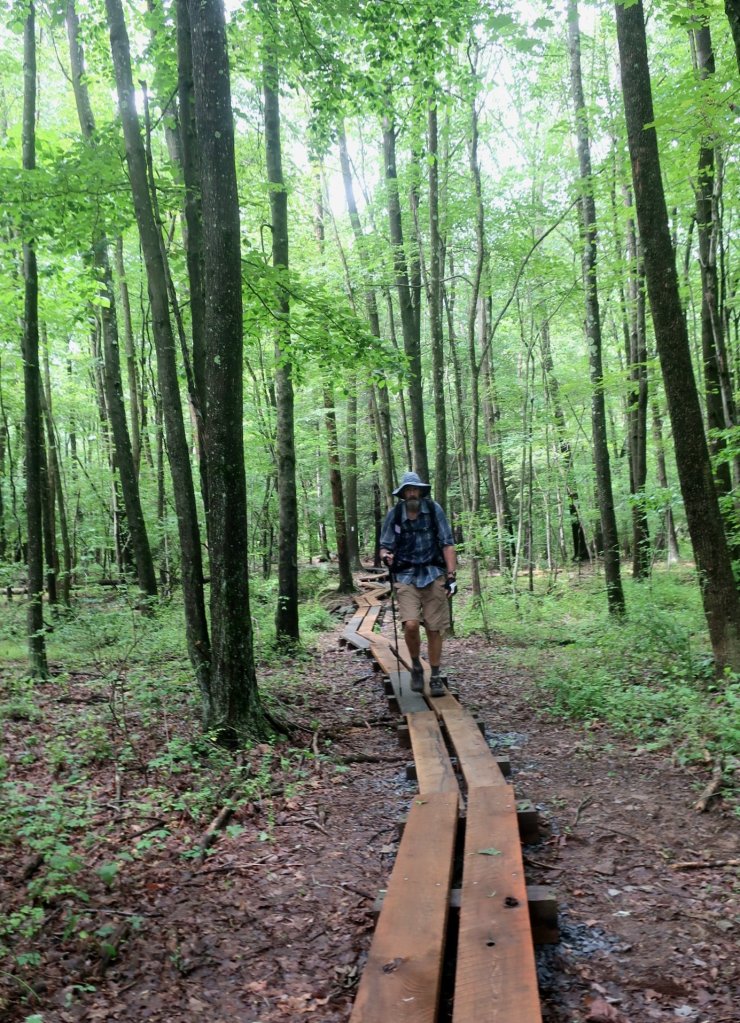
Another short rocky ridge traverse followed and then we were back we on wide open trail. The woods after the rain were absolutely magical. Everything felt so fresh and clean and still and silent except for the birds which sang ever so beautifully. And of course the trail passes underneath the flight path of one of the busiest airport regions in the world around New York. There was a constant hum of airplanes flying overhead.
We met a local out for a short hike and we spent a bit of time chatting to him. Rick was curious about our hike and we were curious about the local area. He was a builder and gave us some building advice. We also learnt the stone walls we’ve been seeing were old property boundaries. Many were built during the Depression by labourers who worked for food and board. And long before then, the walls may have built by slaves.
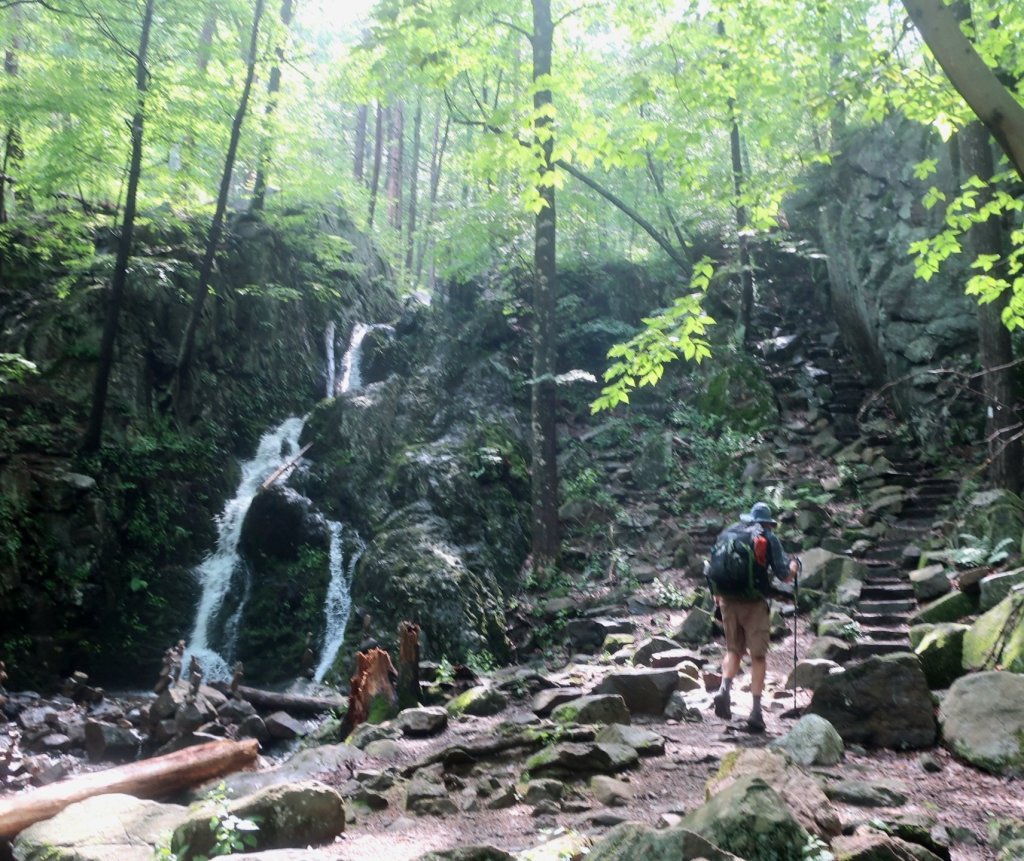
We said goodbye to Rick and soon after crossed Lakes Rd. A few cars were parked at the trailhead we knew we in for a treat. Fitzgerald Falls were pumping after the last 2 days of rain. The trail passes right by the falls. One of the day hikers taking photos told us that the falls were dry just a few days ago.
It was nice to stop for lunch on the side of East Mombasha Road after a diabolical and steep rocky scramble to get over Buchanan Mountain. We needed a break just to get the adrenaline to settle down. Following lunch we hiked along a beautiful waterway.

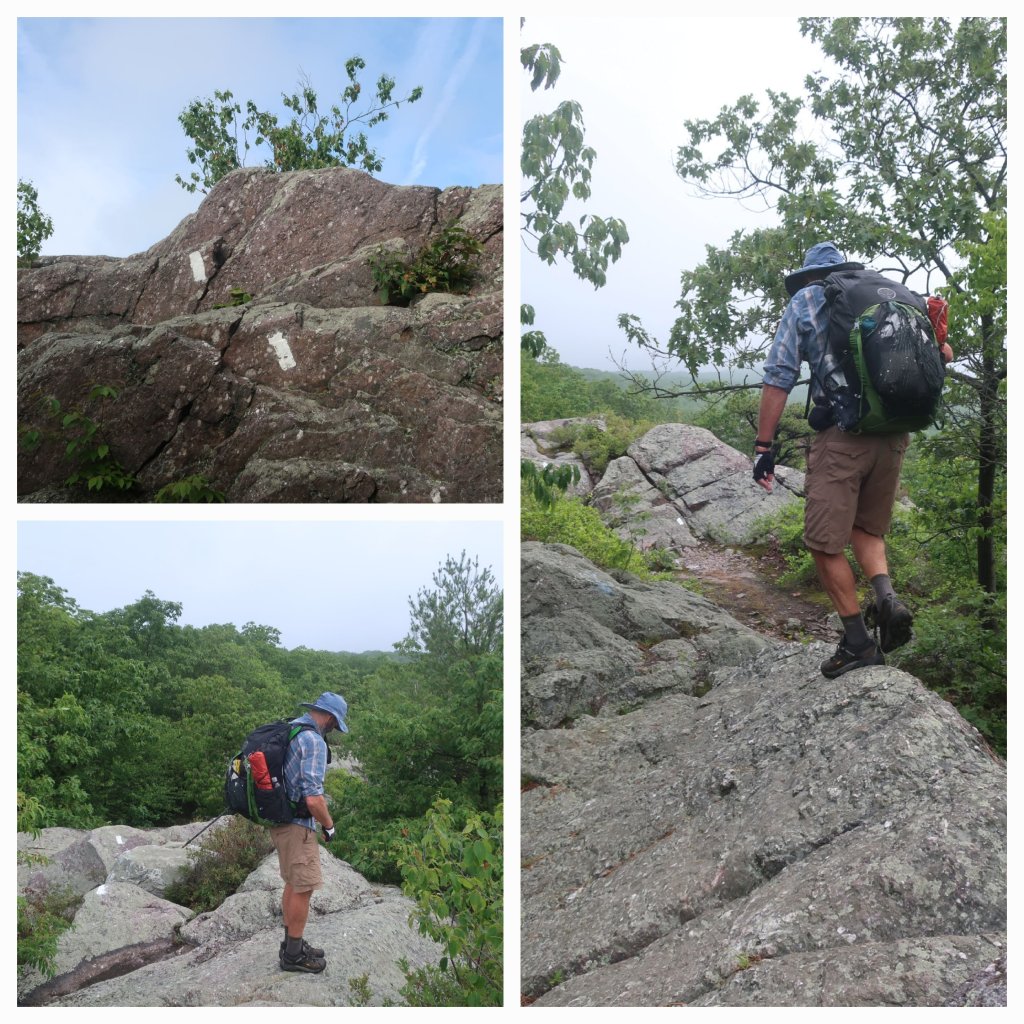

We were pleased to have the rocky scramble out of the way before the rain returned about 2:00 p.m. Rain and a difficult descent down to a very noisy Interstate 87 which we crossed on and overpass. Thank goodness it was a very busy highway. We soon entered Harriman State Park which contains the first ever built section of the Appalachian Trail, located here in the 1920s. A steep ascent over bouldery terrain was not too bad and we still had the Lemon Squeezer coming up in about 1.7 miles. I was trying to decide if I really wanted to go through the squeezer but decided to wait and see.
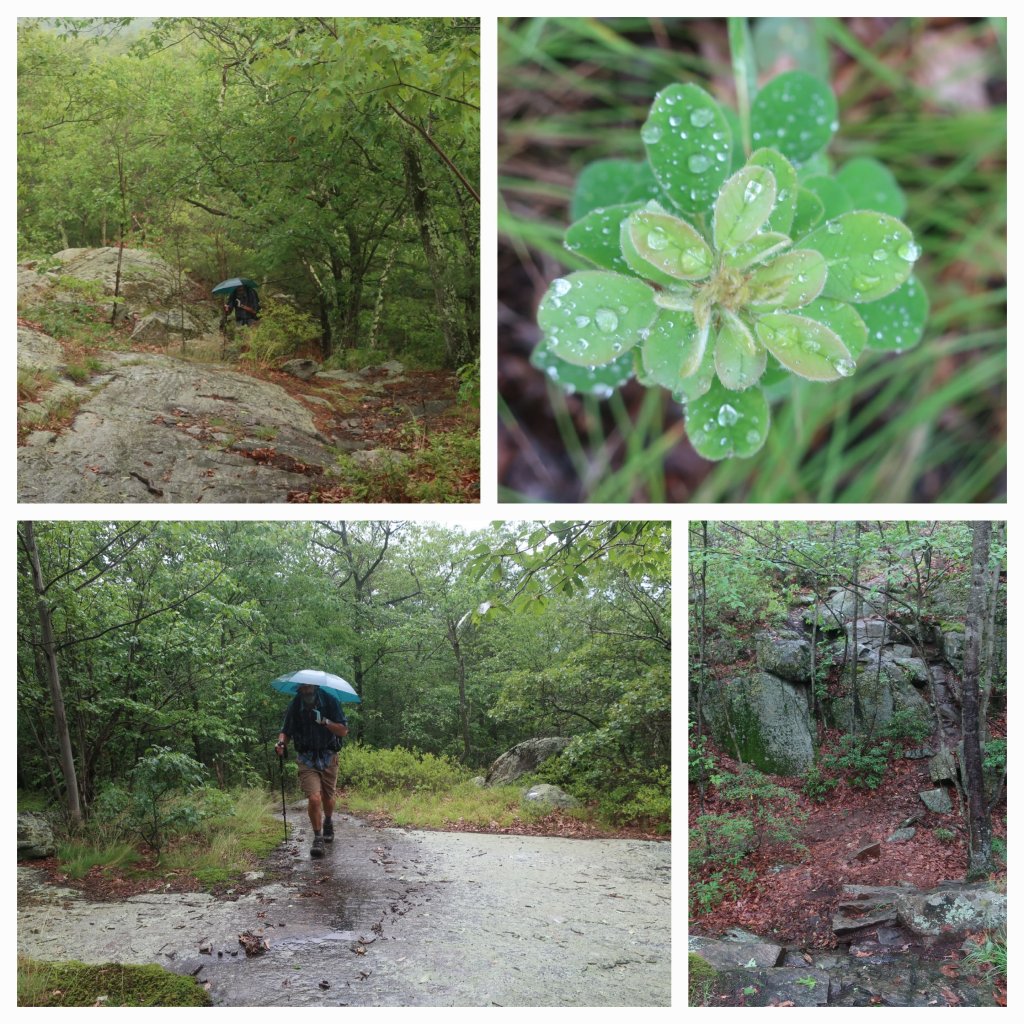
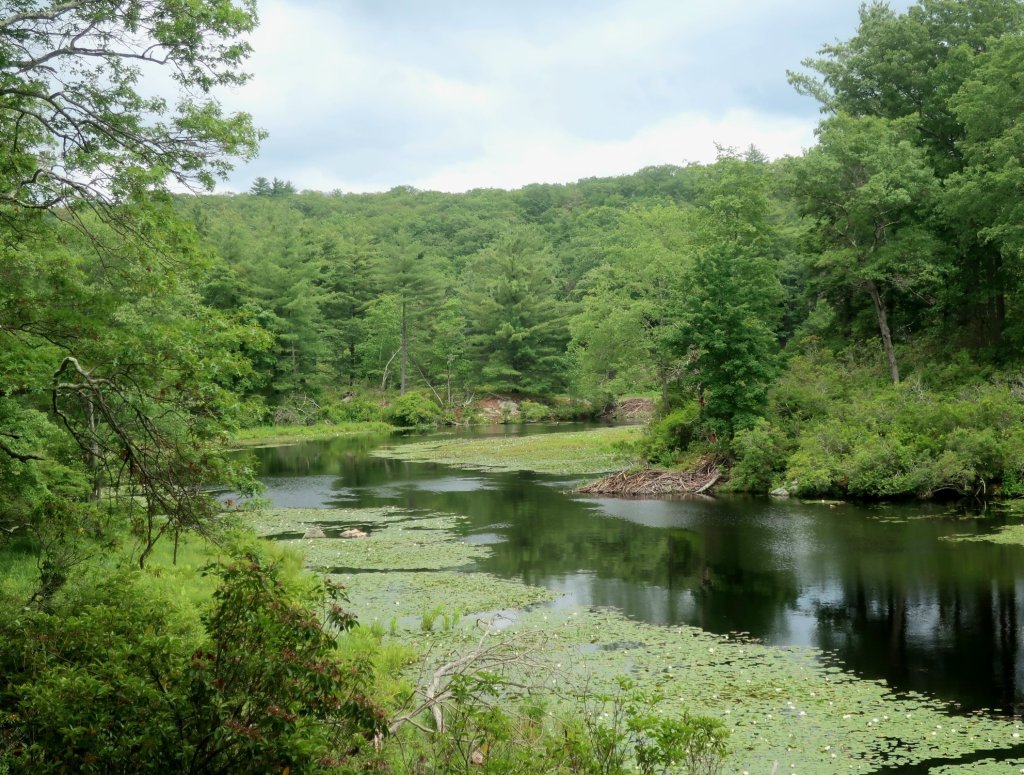
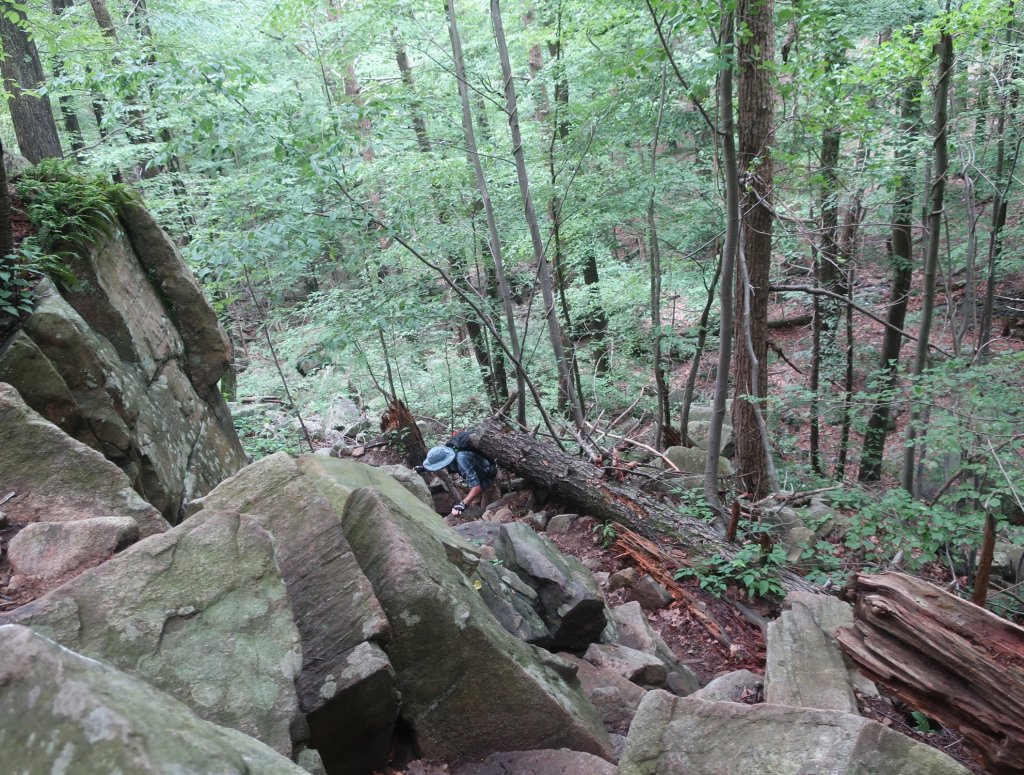
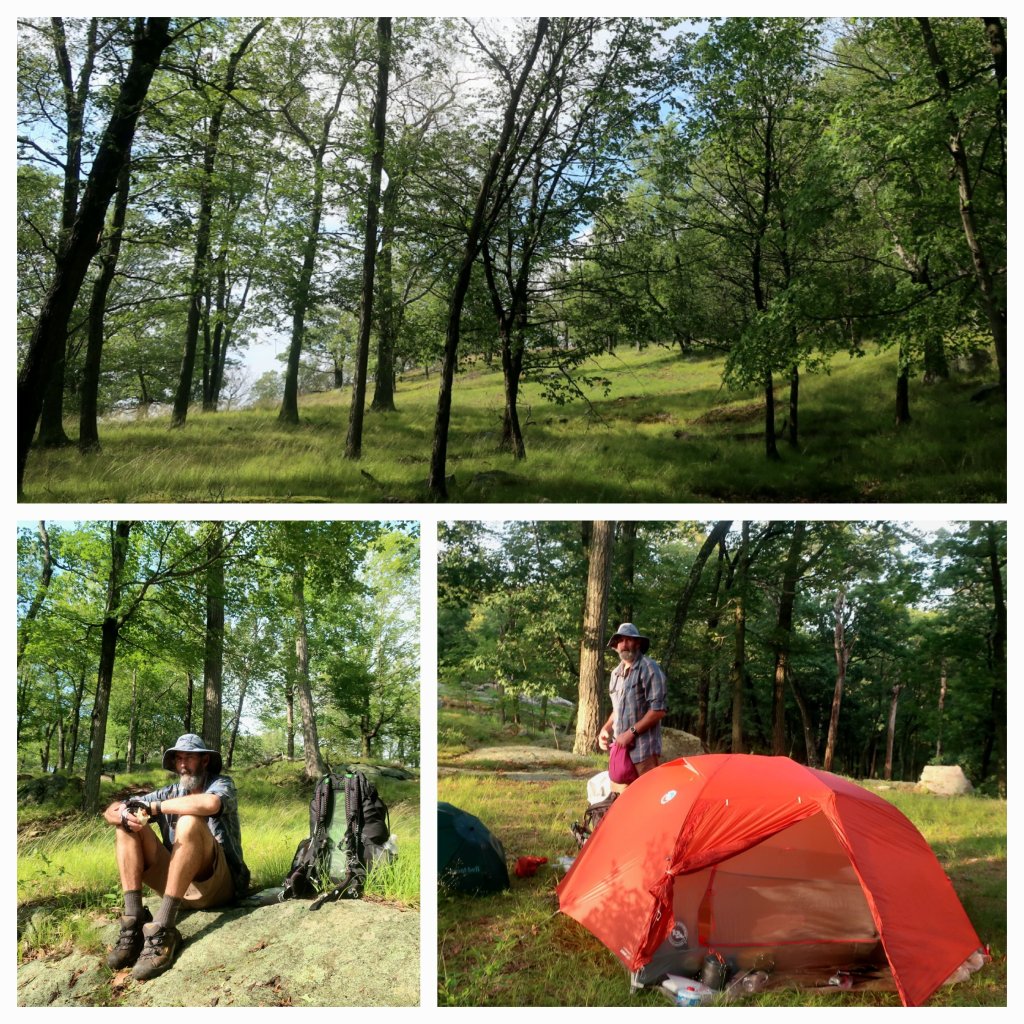
But the time we made it to the Lemon Squeezer it was 5:00 p.m. The rain had gone away and the sun was breaking through. The squeezer was an awkward space to pass though with a pack. It felt gratuitous and so unnecessary for the trail to go through this. The climb after the squeezer was a more daunting prospect for me. It made the descent off the Dragons Tooth look easy. We took a blue blaze around the last bit of the climb. After the squeezer the trail emerged into another world, sunshine tall trees and grassland. It felt so refreshingly beautiful after the last few rocky sections.

A few more rolling rocky passes and we made it to Fingerboard Shelter around 6.30. The section we hiked today was a lot tougher then the map suggested. Happy to stop for the day. I’m beginning to think that we’ve underestimated the rockiness of New York.
That local was inventing stuff out of thin air if he claimed slaves built those walls during the depression…what in the world. Sorry but people say the craziest things.
LikeLike
Oops, my bad. I didn’t expressed myself properly. He said some were build during the depression y people who worked on farms for food and board during the Depression. And some were built by slaves ( possibly – he was guessing ) long before that.
LikeLike
OMG it looks so rough & tough, wet & slippery, be careful 🫢
LikeLike
Like walking on ice.
LikeLike
Imagine the early settlers who arrived in that rocky land and had to try to scrape out a living farming there. Many of them were fleeing religious persecution in Europe and they found an unforgiving environment in the northeast of this continent. The winters are punishing and it was routine for people to starve in the unfamiliar climate. Sometimes it took generations to clear a single field, parents and children trying together to make the land workable enough to survive another year. For a hundred years or more it was uncertain if this existence would survive.
It seems impossible by today’s standards to imagine anyone trying to live this way, but they did. And they were proud of it, as can be read in their writings from the time.
So using their hands and whatever tools they had, rock by rock they pried out of the dirt and carried to the edges of the fields. Rock walls all over that part of the world literally show the foundation of American society: undeterrable faith, willing hard work, and a commitment to freedom that people sacrifice their lives for to this day. That’s why some of us are proud to be Americans and continue living these values. And some of us want to obliterate that history.
LikeLike
Thank you for your thoughtful comment Sarah G. There is so much to be proud of. The resilience of early settlers in any new land is incredible and humbling. Makes me realize how tough people had to be to survive. The harshness of the landscape must have made it near impossible. I’ve been listening to a podcast series called the Green Tunnel. And while it mostly deals with the foundation history of the AT, some episodes deal with history of the land. We like to know the history and try to imagine what it must have been like. And we try to be mindful and respectful of the land through which we are given the privilege to pass.
LikeLike